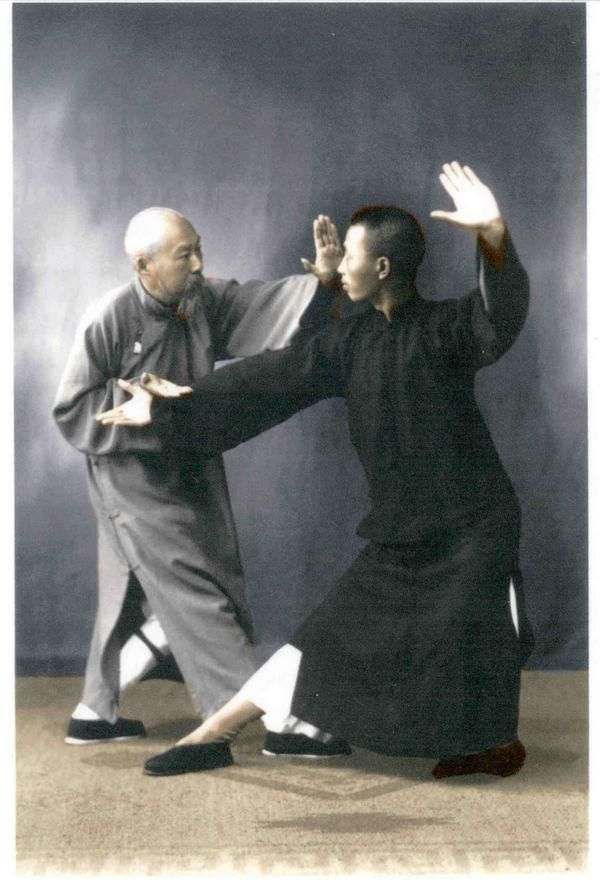
1. Song — Relaxed Release, Not Collapse
Song is often translated as “relaxation,” but it really means releasing unnecessary tension while maintaining structure.
- The body becomes soft but not weak
- The joints open and lengthen
- The muscles loosen without losing integrity
This creates the feeling of being grounded yet light — a key quality in all Tai Chi movement.
2. Rooting — Stability Through the Feet
Rooting means connecting your weight into the ground through relaxed, aligned posture.
- Power rises from the feet
- The legs support the spine
- Movement becomes stable and balanced
A strong root allows the upper body to remain free and responsive.
3. Whole‑Body Integration (Six Harmonies)
Tai Chi movements are never isolated. Every part of the body works together as one coordinated unit. The Six Harmonies describe this integration:
Internal harmonies:
- Mind harmonizes with intention
- Intention harmonizes with energy
- Energy harmonizes with movement
External harmonies:
- Shoulders harmonize with hips
- Elbows harmonize with knees
- Hands harmonize with feet
This creates smooth, connected movement without breaks or stiffness.
4. Yi — The Guiding Intention
In Tai Chi, the mind leads the body. Yi (intention) directs movement before the muscles engage.
- The mind decides the direction
- The body follows naturally
- Force becomes effortless rather than muscular
This is why Tai Chi feels calm yet powerful.
5. Silk‑Reeling Energy (Chan Si Jin)
This principle describes the spiralling, circular quality of Tai Chi movement.
- Power travels through the body like unwinding silk
- Movements are continuous, without abrupt starts or stops
- Spirals create strength without tension
This internal spiralling is one of the signatures of Tai Chi’s martial mechanics.
6. Peng Energy — The Internal Support Structure
Peng is the fundamental internal force of Tai Chi. It feels like:
- gentle expansion in all directions
- buoyancy and resilience
- a springy, alive quality in the body
Every movement — even yielding ones — contains Peng.
7. Yin and Yang — Complementary Opposites in Motion
Tai Chi is built on the interplay of Yin (soft, yielding) and Yang (firm, active). Every movement contains both:
- When one arm expands, the other softens
- When weight shifts forward, the rear leg stabilizes
- When the body sinks, the mind rises
This balance creates harmony and fluidity.
8. Central Equilibrium (Zhong Ding)
This is the ability to maintain balance and awareness through all movements.
- The spine stays upright
- Weight shifts smoothly
- The centre remains stable even while the limbs move
Zhong Ding is the “axis” around which Tai Chi turns.
9. Continuous Flow — No Breaks, No Stops
Tai Chi is often described as “a river that never stops flowing.”
- Movements link seamlessly
- Transitions are as important as postures
- Stillness exists within motion
This continuity trains calmness, coordination, and internal awareness.
Why These Principles Matter
These internal principles are what give Tai Chi its unique qualities:
- Softness with strength
- Relaxation with structure
- Calmness with alertness
- Effortless power
- Fluid movement with martial intent
They turn simple movements into a deep internal practice that benefits health, balance, and self‑defence skill.